What is Going on in the Building Material Market?

To all our friends and customers

Early in March, when COVID19 started to come into our daily lives businesses in our industry questioned if they would have any business at all or even be able to stay open. Many sawmills cut back or closed in preparation of a downturn in business. At Dain’s, we focused on trying to make our facility safe for our customers and employees while working on a plan to keep our 172-year-old company in business and our employees employed.

People staying at home began planning the building of decks, raised garden beds, updating their homes, as this is where they would be spending most of their time. Although well stocked with materials for a normal year, we soon became very busy as well as our pressure-treated vendors were also busy trying to fill those orders. As COVID and shelter in place orders continued, more homeowners dived into home renovation. Contractors began ordering excess materials in anticipation of a shortage of building materials. Once the state allowed contractors to resume working, we were hit with a frenzy of people looking for materials, in particular pressure treated lumber for exterior structures at a volume that we have never experienced before.

Supply and demand caused pressure-treated products to skyrocket in price while the inventory dwindled.  Lumber mills and chemical treaters were and are still not able to catch up. This coupled with the lack of chemicals available to treat the lumber has caused the problems in the supply chain that we have been experiencing as a consumer and retailer. Supply and demand problems are now seeping into the framing and plywood markets.

The past two months have been the most incredibly difficult times as a retailer. The surge of business and phone calls from customers wanting materials, quotes and answers has placed a strain on our retail operations that we are struggling to keep up with. Employees have been working non-stop to get back to customers. Sadly, we have not been able to keep up with this unprecedented demand. We apologize to every customer that we have been unable to attend to, get back to in a timely fashion and to any customer who has experienced any frustrations in our customer service. We are reflecting on what changes we can institute to improve our customer experience and ask for your patience as we navigate our way through this.

At the present time, we are still unable to get many pressure-treated products and quite frankly have no idea when we will get stock. We have managed to get one truck of pressure-treated a week with some products like pressure-treated decking with pressure-treated 4x4’s remaining the hardest stock to get.

Although this has been an extremely trying time for us, we remain grateful that the staff and families of Dain’s Lumber have remained healthy. Sadly, some of our customers have succumbed to this virus. Our hearts go out to their families. We also express sympathies to the many businesses that have had to shut down or close their doors.  While we do not know what lies ahead, we can only hope that the pandemic comes to an end sooner rather than later.

On the river, in the turmoil of white-water rafting, there is an expression to “point positive” and that, I believe, is what we need to do. I thank you and pray that we all remain safe and healthy.

- Jeff Dain & James Dain

LOGO - N. DAIN'S SONS CO. (2) (1).png

Supply Issues

IMG_6752.JPG

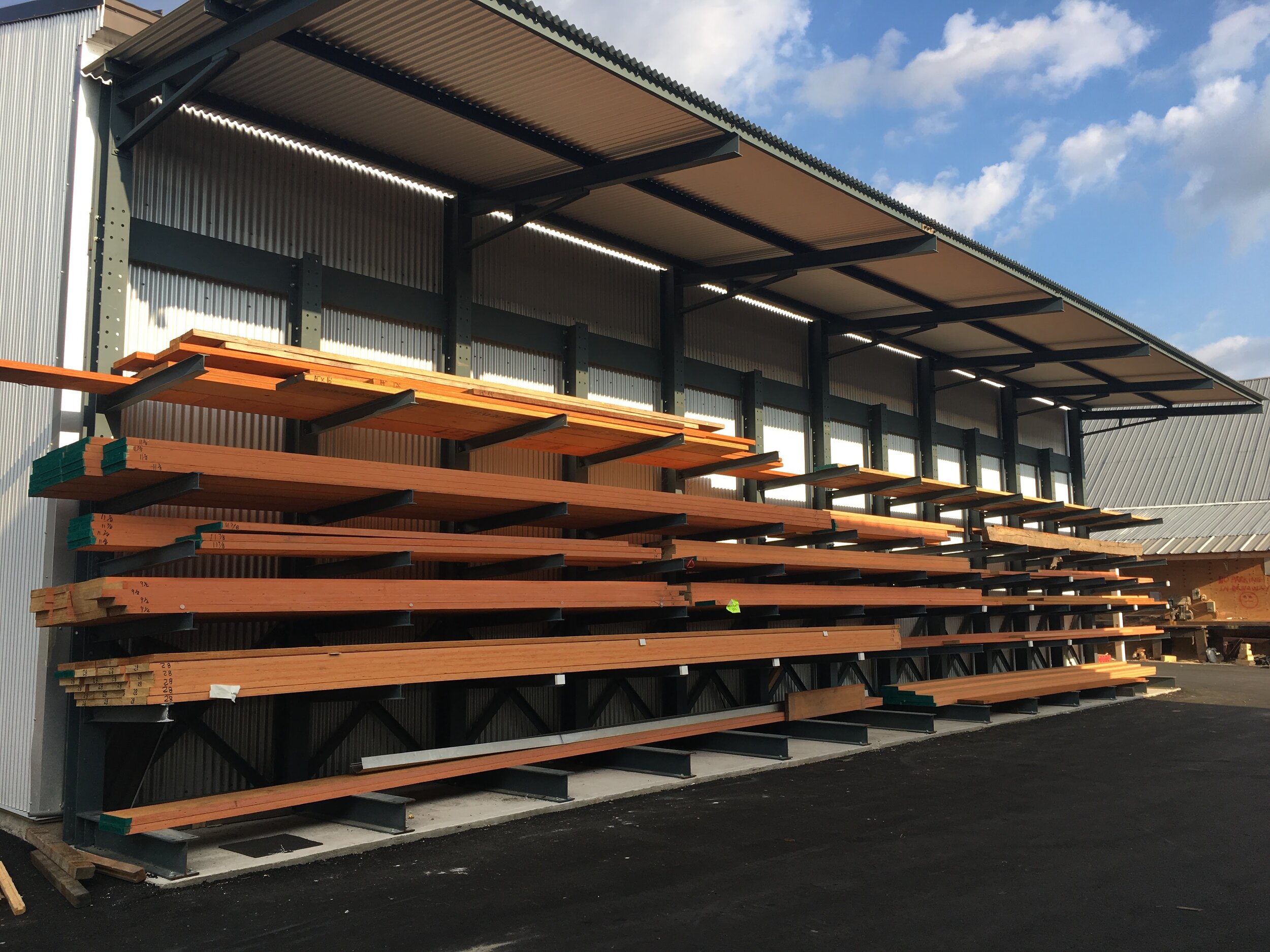
Just a reminder that we are seeing supply issues from the manufacturing and distribution companies we deal with. Lead times on some window and door products are extended by a week or two. Decking products from Trex, TimberTech and all decking have significant holes in the inventory at our distributors. They continue to fill back orders as they arrive. We've been quoted lead times into August for some products. Treated Lumber has been sparse. In normal times, we place an order for a truckload and receive it within 1 week. Right now its a 5 week lead time and they are limiting the amount of 4x4, 4x6, 6x6 and decking that we can buy. Prices are way up as well. We do have some lower price point decking products by Fiberon that could be a fit to convert an existing treated decking quote. Plywood and dimensional fir lumber are being affected as well.

Any questions please reach out to your sales rep. 

call
Dain's Logo (1).png


Building a Raised Garden Bed

Annotation 2020-05-20 152845.jpg

Do you have visions of planting fresh vegetables in your backyard but don’t know where to start? Or have you tried to plant a garden in the past, only to be met with below-average results? Raised garden beds may be the perfect solution. 

Raised beds are basically a bottomless box, consisting of four-sided frames to hold the above-ground piles of soil in place. Since the beds are open to the ground, they offer superior drainage and allow the plant roots to stretch out underneath the ground.  Raised beds are also effective for less-than-perfect soil conditions, plus they reduce gardening work and increase yield. 

Raised garden beds are a relatively simple DIY (do it yourself) project that can be done on a weekend afternoon. Read on for tips on how to build your own.

Planning the Location

  • Choose a spot with maximum sun exposure. 

  • If possible, place the long side of the bed facing south to ensure that all plants in the bed receive an equal amount of sunlight. 

Building the Raised Bed

The great part about building your own is that it can be as simple or intricate, and as big or small as you want. The frame can be as easy as placing 2 x 4s on top of the ground or using patio retaining wall blocks to create your space; or if you’re handy, you can assemble your own beds. You also have the option to choose the wood for your beds. Natural water-resistant woods, such as cedar and redwood, can be hard to find and come at a higher price. Fir and pine will work as well, but won’t last as long. 

For the DIY’ers, here’s how to build a 4’ x 6’ bed, 10.5” high using 2 x 4 untreated lumber: 

  • Measure the length of the walls and cut the 2 x 4s; also measure and cut for the corner posts, which should be the height of the bed wall. If you don’t have a saw (or don’t trust your cutting abilities), the experts at Dain’s Lumber can cut the lumber for you.

  • Clamp together the 2 x 4s for each wall and set the corner posts atop the wallboards, ensuring the ends are flush. Drill pilot holes, then attach the 10.5” posts (on the inside of the bed) with heavy-duty screws. 

  • Connect all the sides with screws, forming a bottomless box.

Preparing the Location

  • Put the constructed frame in the desired location and outline the area with a shovel. For proper drainage and root growth, it’s better to set up your bed on the ground versus a hard surface (i.e. concrete). 

  • Remove the frame and start digging. If you have a spading fork, loosen the existing soil to help the roots of your new plants grow deeper into the ground. 

  • Staple wide-mesh hardware cloth to the frame’s bottom prior to setting your bed in place. This will help keep the weeds out. 

Adding Soil (and Plants) 

  • Choose a high-quality, nutrient-rich soil and plants appropriate for the location. Some of the best plants to grow in raised beds include most vegetables, herbs, berry bushes, and small shrubs as they have shallow roots. Follow the plant tags for specific care and conditions. 

  • Determine how much soil you will need. It can be calculated by multiplying the length x width x height of your bed. For example, a bed 4’ x 6’ x 10 inches would need 20 cubic feet of soil. 

Maintenance

  • Water your beds in the morning when less water evaporates in the sun. 

  • Add compost and/or soil enhancements to help revitalize the soil and keep it fertile, especially during the first season or two. 

Now that your beds are built, you can reap the following benefits:

  • Soil improvement. With raised beds, you are in control of the soil and growing conditions. By filling the frame with nutrient-rich soil, you instantly create near-perfect conditions for your edible garden to flourish. 

  • More produce. Raised beds allow the nutrient-rich soil to better feed your plants, resulting in a vegetable yield up to twice as much as in-ground beds. 

  • Extended growing season. Soil above ground tends to be warmer and better drained, allowing your plants to grow longer. 

  • Efficiency. Raised beds allow for dense planting so more plants can grow in a smaller area. Since most beds are three to four feet wide, they are a great choice for smaller spaces and urban farmers. 

  • Accessible. Above-ground gardening minimizes kneeling down and bending over when tending to and harvesting crops. This potentially means fewer aches and pains for you or the gardener in your home. 

  • Fewer weeds. Weeds don't have much room to grow, especially in a densely planted bed. If some weeds do sneak in, they are easily removed thanks to the loose soil.

  • Protection. The beds prevent people and pets from stepping on your garden. The tall sides serve as a barrier against snails, slugs, and other plant-eating pests. 

  • Aesthetics. Raised beds can provide an architectural element, creating focal points and adding symmetry to your garden and outdoor space. 

Every generation of our family has grown up in the lumber business. And we love that we get to share our passion with our customers every day. But, most of all, we take the Dain’s Lumber legacy of quality, expertise, service, and craftsmanship very seriously. When you come to us, you know you’re getting over 170 years’ worth of history behind every product, piece of advice, and interaction you receive. Visit our website or give us a call at  914-737-2000 to discuss your projects today.

Copy (3).png
QUALITY LUMBER